ServicesSiding Installation
Siding Installation in Columbus, NC
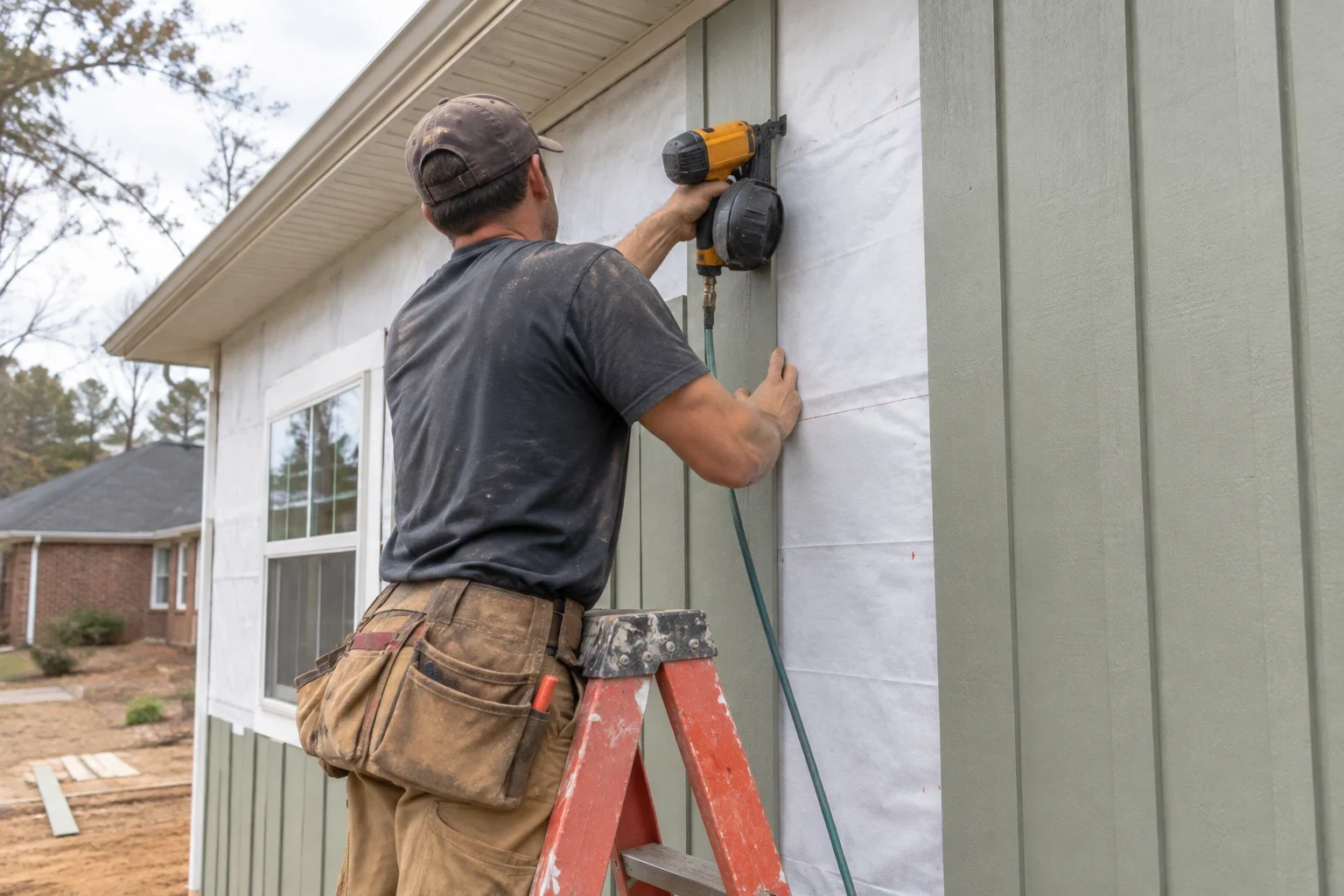
We tear off worn siding, fix what we find underneath, and put new siding over a wall that is wrapped and flashed the way the code and the manufacturer call for. You get a house that sheds water and looks right.
What New Siding Really Involves
Siding is the part you see. The part that keeps water out is behind it: the house wrap, the flashing around windows and doors, and the trim details where walls meet roofs and decks. When those are skipped, new siding can hide rot for years.
We handle siding installation on existing homes and as part of a larger remodel. We work with vinyl, fiber cement and engineered wood. Each one has its own rules for nailing, gaps and clearance, and we follow them so the product holds up as long as it should.
Before we start, we tell you plainly whether your job needs a permit and what an inspector would look for. If it needs one, we handle the paperwork.
What Your Siding Job Includes
Removing the old siding
Old panels, trim and fasteners come off and leave your property in our trailer. We open one wall at a time, so no side of the house sits bare overnight.
Sheathing and rot repair
Once the wall is bare, we check the sheathing and framing. Soft or rotted spots get cut out and replaced before anything goes over them. We show you photos of what we found.
Water-resistive barrier
We wrap the walls and lap every seam so water runs down and out, not in. Rips get taped, not ignored.
Flashing at every opening
Windows, doors, hose bibs and vents all get flashed. We add kick-out flashing where a roof edge dies into a wall, which is one of the most common places rot starts.
Proper clearances
We keep the siding the right distance off the ground, roofs and decks, as the code and the maker's instructions require. That gap keeps the bottom edge from wicking up water.
Trim and cleanup
Corners, soffit edges and window trim are finished to match. We sweep the yard with a magnet for nails before we leave each day.
Signs It Is Time for New Siding
Soft or swollen boards
Press on the lower courses. If the siding gives or the edges have swelled, water is getting behind it.
Stains inside on exterior walls
Water marks or peeling paint on the inside of an outside wall often trace back to failed siding or flashing.
Cracked, warped or loose pieces
Vinyl that has buckled or panels that rattle in the wind are no longer sealing the wall.
Paint that won't hold
Wood siding that starts peeling again soon after a fresh coat usually has moisture trapped behind it. That water lifts the paint from the back side, and no amount of scraping fixes it.
Mildew that keeps coming back
Long, humid summers here are hard on north walls. Green growth that returns right after a wash can mean the wall stays wet.
How a Siding Job Runs
- 1
Walk-around and consultation
We look at every wall, check the trim and probe suspect spots. Then we talk through materials, colors and what the job will involve.
- 2
Written estimate and code check
You get a line-item estimate with any likely rot repair called out. We tell you whether the county needs a permit for your scope and take care of it if so.
- 3
Tear-off, repair and wrap
We strip a section, fix the sheathing, then wrap and flash it the same day. If we open up more damage than expected, we stop and show you before going further.
- 4
Siding, trim and final walk
New siding and trim go on, then we walk the house with you. If there is an inspection, we meet the inspector and close it out.
What Moves the Price of Siding
Every house is different, so we price from what we see on your walls. The biggest swings come from the material you pick and what turns up once the old siding is off. We put each item on paper so you can see where the money goes.
- Wall area and height
- More square footage costs more. Two-story walls and steep lots need staging or lifts, which adds labor.
- The product you pick
- Vinyl sits at the lower end, engineered wood lands in the middle, and fiber cement usually costs the most to buy and to put up. Fiber cement boards are heavy, and cutting them takes more care, so a crew hangs fewer of them in a day.
- Condition underneath
- Rotted sheathing or framing has to be replaced. How much damage is hiding only shows once the old siding comes off, so your estimate spells out how any repair we find will be priced.
- Trim and openings
- Lots of windows, doors, gables and corners mean more flashing and more cutting.
- Inspection and paperwork
- Some scopes need a permit and an inspection, and some do not. If yours does, the county fee and the time to meet the inspector are part of the job.
Siding Questions We Hear
Something not covered here? (828) 624-2779
Do I need a permit to replace my siding?
It depends on the scope. Straight replacement often falls under a different rule than work that touches framing or adds windows. We check with the county for your job and tell you the answer before we start. If one is needed, we pull it.
Can you put new siding over the old siding?
We do not recommend it. A second layer seals in whatever damage is already there, and the window and door flashing never sits right against the wall. Taking the old siding off lets us see the sheathing and fix it before anything new goes up.
Which siding holds up best here?
Fiber cement stands up to heat, damp and woodpeckers, and it holds paint well. Vinyl is the lower-cost pick and asks for little more than an occasional wash. Engineered wood looks like real lumber but resists moisture better than plain wood boards. We go over the tradeoffs during the consultation.
Will I need to be home while you work?
No. We do need access to outside outlets and water, and it helps to move patio furniture and grills away from the walls. Expect some hammering noise inside during the day.
What happens if you find rot?
We stop, take photos and show you. Then we explain the repair and the cost before we go on. Nothing gets covered up.
Ready to Look at Your Walls
Tell us about your house and what you are seeing. We will set a time to come out, check the walls and talk through materials and code.