ServicesLand Clearing
Land Clearing in Columbus
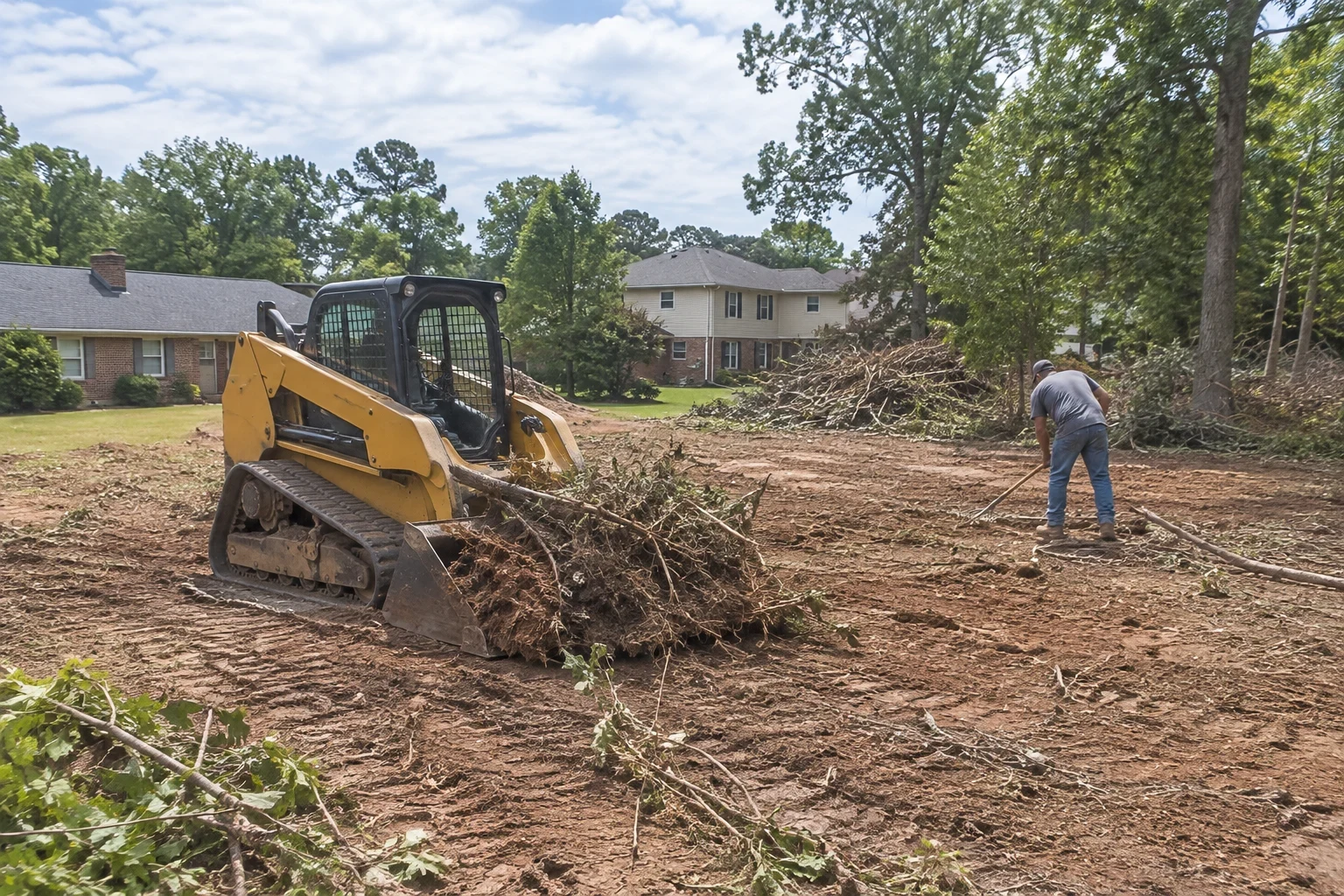
We clear wooded and overgrown lots for new homes, additions and outbuildings. Trees, brush and stumps come out, erosion control goes in, and the ground is left ready for grading and the foundation. You know what stays and what goes before we start.
The first real work on a wooded lot
Before anyone can stake a house, the ground has to be opened up. Clearing makes room for the house site, the driveway path, the septic area and the equipment that follows. Done carelessly, it leaves buried stumps under the slab, loose soil washing downhill and trees cut that you wanted to keep.
We clear with the whole build in mind. We go over the lot with you, pick out the trees worth saving, and set the limits of disturbance before a saw starts. Silt fence and other erosion measures go in first, because North Carolina rules on sediment control apply to cleared ground, and larger disturbed areas need an approved plan before work begins.
Most lots in the foothills come with hardwoods, pine, thick understory and some rock. We plan for all of it up front so the next crews, from grading to foundation work, start on clean, stable ground.
What our land clearing covers
Lot walk and flagging
Before any cutting, we cover the ground together and tie flagging tape along the clearing line. Healthy trees you want to keep get marked and protected so equipment stays off their roots.
Tree and brush removal
We take down trees inside the build area and clear brush, vines and saplings. Logs can be cut to length for firewood if you ask, or hauled off.
Stump and root removal
Under the house, driveway and septic field, stumps come out whole with the main roots. A ground-down stump left under a footing rots and leaves a soft spot later.
Erosion and sediment control
We install silt fence, a stone construction entrance and other measures the site needs. When the disturbed area is large enough to need an approved erosion plan, we get that in place before clearing.
Debris handling
Brush and stumps are hauled off, ground into mulch on site, or burned only where local rules and a permit allow it. We tell you which option fits your lot.
Handoff to grading
The cleared lot is left ready for grading, with topsoil stockpiled where it can be reused later for lawn and planting beds.
When your lot needs clearing
You have land and a floor plan
If you own a wooded lot and know roughly where the house will sit, clearing is the next step. It is hard to stake a foundation through standing timber.
No way in for equipment
Concrete trucks, well rigs and delivery loads need a cleared, firm driveway path. If you can barely walk the route, a truck cannot drive it.
Planning an addition or garage
Expanding into the side or back yard often means trees close to the existing house. Those need careful removal so limbs and roots do not damage what is already there.
Old stumps where you want to build
Previous logging or storm damage can leave stumps and buried wood. They have to come out before any footing or slab goes in.
Overgrowth hiding the ground
Thick brush can hide drainage paths, rock outcrops and old debris. Clearing shows the real shape of the lot so the plan matches the ground.
How a clearing job runs
- 1
Project consultation
We talk through your lot, your plans and what you want to keep. Then we visit the site to look at slope, access and tree cover.
- 2
Permits and erosion plan
We check what the county requires for your disturbed area and for burning, if any. Required plans and permits are lined up before equipment arrives.
- 3
Erosion control goes in first
Silt fence and the construction entrance are installed, and the clearing limits are flagged. Keep-trees get protective fencing at the drip line.
- 4
Cutting, stumping and hauling
We drop trees, pull stumps in the build zones and handle debris the way we agreed. Topsoil is pushed aside and saved.
- 5
Walkthrough
We walk the cleared lot with you and confirm the limits, the saved trees and the erosion measures. Then it is ready for grading.
What drives the cost of clearing
We set a price for clearing once we have stood on the lot. Two things matter most: how much ground gets opened up and what is growing on it. During the project consultation we go through each factor below, so you can see where the number comes from.
- Acreage and tree density
- A half acre of scattered pine is a different job than an acre of mature hardwoods. More trees and bigger trunks mean more cutting, stumping and hauling.
- Slope and access
- Steep ground and tight entry points slow equipment down and can call for smaller machines. Rock near the surface also adds time.
- Debris disposal method
- Hauling everything off, grinding on site and permitted burning each cost differently. Your lot size and local rules help decide which works.
- Erosion control needs
- Larger disturbed areas and sites near streams need more silt fence and possibly an engineered plan. Smaller, flatter lots need less.
Land clearing questions
Something not covered here? (828) 624-2779
Does clearing my lot need county approval?
Sometimes. North Carolina generally requires an approved erosion and sediment control plan before anyone disturbs an acre or more. Below that size, silt fence and other measures still have to be in place. We look up what applies to your lot and take care of that paperwork with you.
Can you save certain trees?
Yes. We mark them together on the site walk and fence them off at the drip line. Keeping heavy equipment off the root zone matters as much as not cutting the tree.
Why pull stumps instead of grinding them?
Grinding leaves roots in the ground. Under a driveway or foundation those roots rot over time and the soil settles. Outside the build areas, grinding can be fine, and we will tell you where.
How long does clearing take?
A small, open lot can be done in a few days. Dense woods, slopes or rock take longer, and county approval can add time before we start. We give you a realistic schedule after the site visit.
What happens after the lot is cleared?
The next step is usually grading to set drainage and the building pad, followed by foundation work. Since we handle those too, the lot does not sit open and exposed between crews.
Ready to open up your lot
Give us a rough idea of the land and the house or addition you have in mind. On the call we go over clearing, county requirements and the order of work after that.