ServicesGrading
Grading in Columbus
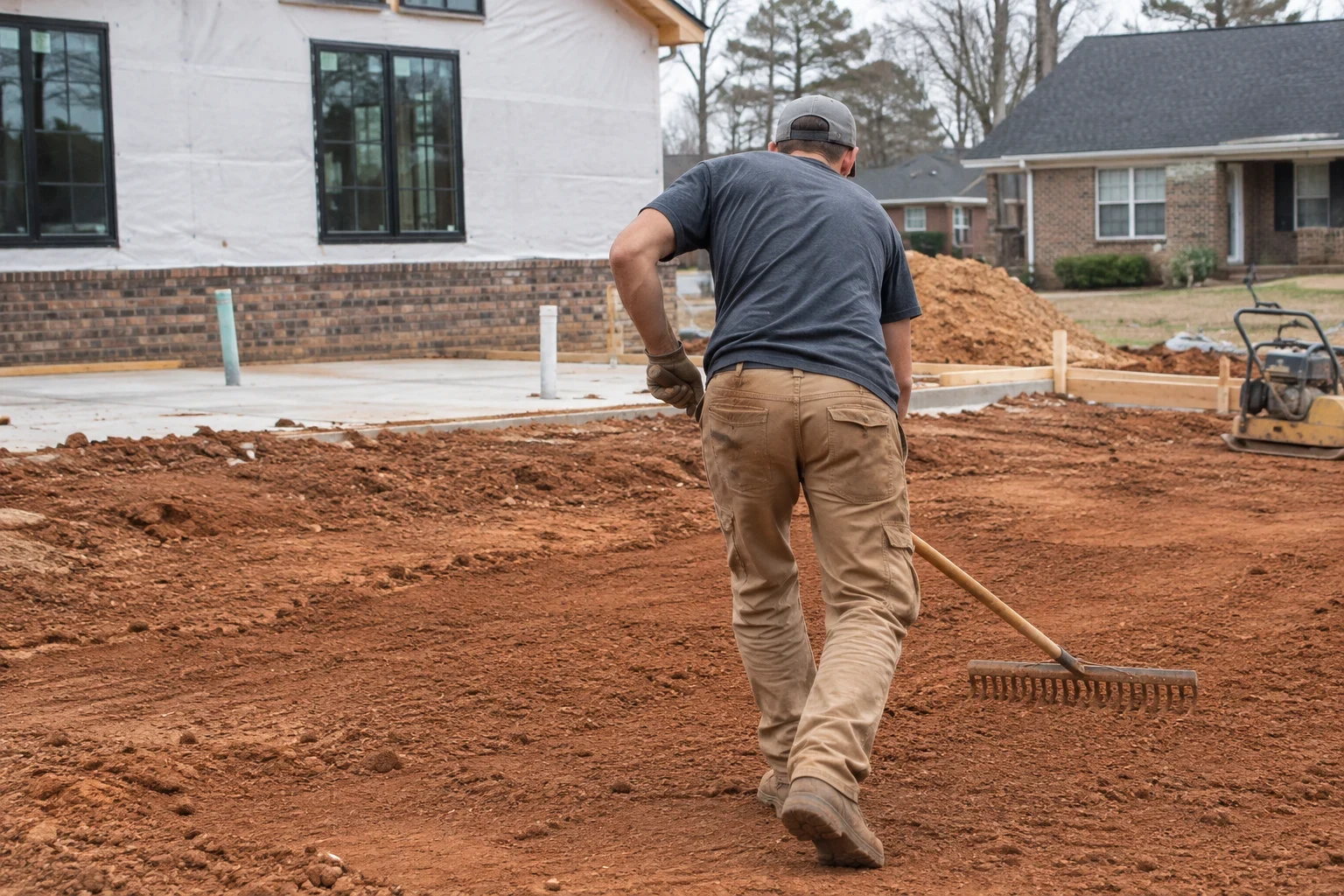
We grade lots for new custom homes, additions and drainage fixes. That means cutting and filling to the right elevations, sloping soil away from the foundation and putting erosion control in place, so the site is ready for inspection and the next crew.
What grading does for your build
Grading is the dirt work between land clearing and foundation work. We set the pad where the house will sit, shape the slopes around it and decide where every bit of rain will go. Get it wrong and you see it later as a wet crawlspace, a cracked slab or a washed-out driveway.
Most of our grading is on sloped lots with dense red clay, which sheds water fast and holds it once it soaks in. We plan for that from the first stake.
We also handle the paperwork side. Grading is where permits and erosion rules first touch a project, and we explain each step before any soil moves.
What our grading work includes
- Site layout and elevations
- We stake the house corners and set finished grade heights from your plans. Everything else is measured from those marks.
- Cut, fill and compaction
- We cut high spots and fill low ones in thin layers, compacting each one. Loose fill under a footing or slab settles, so we do not skip this.
- Slope away from the foundation
- We shape the soil so it drops at least six inches over the first ten feet out from the walls. That is the residential code minimum, and we go steeper where the lot allows.
- Erosion and sediment control
- Silt fence, construction entrances and seeding or straw keep mud on your lot and out of ditches and streams. Inspectors look for these early.
- Drainage shaping
- We shape swales and set slopes so runoff from the roof, the driveway and the hill above has a clear path off the site.
- Final grade and topsoil
- Once the house is built we come back for final grading, spread topsoil and leave a surface ready for seed or landscaping.
When a lot is ready for grading work
Rain pools along the foundation
After a storm, water collects against the walls instead of running off. The ground is pitched toward the house, and that water finds its way into the crawlspace or basement.
A new home or addition is planned
Footings need a firm, level base set at the right height. We shape and compact that pad before any trench is dug.
Gullies and red mud after heavy rain
Ruts cut through the yard or clay washed across the driveway show water running where it should not.
The crawlspace stays damp or smells musty
The fix often starts outside. Turning the slope away from the walls can stop water before it gets to them.
Sunken spots or a tilting patio
Low ground along the house or a patio leaning toward the wall usually comes from fill that was never compacted.
How a grading job runs
- 1
Project consultation
We talk through your lot, your plans and what you have seen when it rains. Then we walk the site and look at slopes, soil and where water leaves the property.
- 2
Paperwork and erosion plan
We tell you which approvals apply and line them up. In North Carolina, disturbing an acre or more usually needs an approved erosion and sedimentation control plan before work starts, and smaller sites still need basic controls.
- 3
Controls go in first
Silt fence and a gravel construction entrance go in before the main dirt work. That keeps the site in line with the approved plan from day one.
- 4
Rough grade and pad
We cut, fill and compact to the staked elevations and check heights as we go. The pad is ready for footing inspection and foundation work.
- 5
Final grade and cleanup
After construction we set the finished slope, spread topsoil and stabilize bare ground. We haul off debris and leave the lot tidy.
What sets the price of a grading job
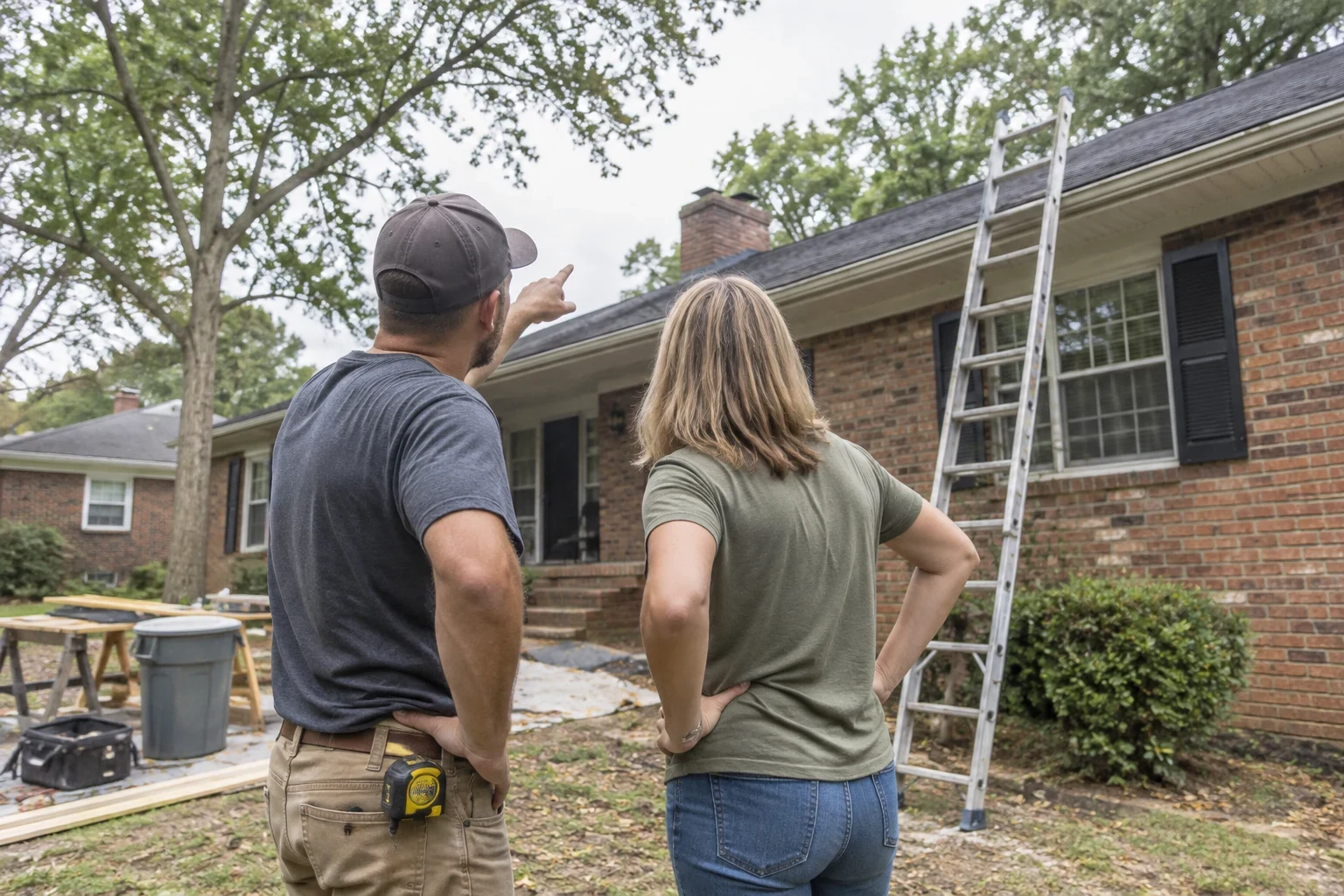
We put a number on grading only after walking the land, because no two lots move the same amount of dirt. Your written estimate lists the dirt work, erosion control and any hauling as separate lines, so you can see what each part pays for.
- Slope and how much dirt moves
- A steep lot needs more cut and fill than a gentle one. Bringing in fill or hauling out spoil adds to the cost.
- Soil and rock
- Heavy clay is slow to compact when wet. Hitting rock may mean extra equipment or a change to the plan.
- Access for equipment
- Narrow drives, tight spaces or soft ground can slow machines down and change which equipment we bring.
- Permits and erosion control
- Larger disturbed areas need a formal plan and more controls. We price that in up front instead of adding it later.
- Weather and timing
- Clay that is soaked cannot be compacted right, so wet weeks can push the schedule.
Grading questions we hear
Something not covered here? (828) 624-2779
Do I need a permit to grade my lot?
Often, yes. If you disturb an acre or more, North Carolina generally requires an approved erosion and sedimentation control plan. Smaller jobs may still need county or town approval, usually tied to the building permit. We check the rules for your property and handle the filing.
Can you grade before I have house plans?
We can clear and rough shape a lot, but the pad height and drainage depend on the house. It works best when we grade from your floor plan and foundation type. That way nothing gets dug twice.
Will grading fix water in my crawlspace?
In many cases it is the biggest part of the fix. If the soil slopes toward the house, regrading it away usually cuts down the water a lot. We will tell you if gutters, a drain or foundation work also need attention.
How long does grading take?
A pad for a single house or addition often takes a few days of machine work. Steep lots, rock or rain stretch that out. We give you a realistic schedule during the consultation and keep you posted if weather changes it.
Which towns besides Columbus do you take grading jobs in?
Our crews work across the surrounding area, including Landrum, Flat Rock, Hendersonville and Rutherfordton. Each county sets its own erosion and building rules. We look those up for your property before the first machine rolls onto the lot.
Start the build on solid ground
Tell us where the land is and what is going on it. We will walk the lot with you, go over the approvals it needs and put a written estimate in your hands.